What is Distracted Driving?
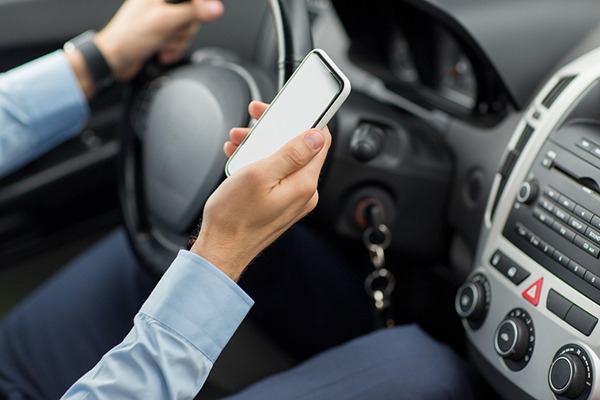
Distracted driving is any activity that could divert a person’s attention away from the primary task of driving. All distractions endanger driver, passenger, and bystander safety.
These types of distractions include:
- Texting
- Using a cell phone or smartphone
- Eating and drinking
- Talking to passengers
- Grooming
- Reading, including maps
- Using a navigation system
- Watching a video
- Adjusting a radio, CD player, or MP3 player
If you receive a traffic ticket for distracted driving, contact experienced distracted driving lawyer Keith J. Williams Law before paying the fine!
Distracted Driving Key Facts & Statistics
Pennsylvania’s Texting-While-Driving Ban
Distracted driving is dangerous. But, because text messaging requires visual, manual, and cognitive attention from the driver, it is by far the most alarming distraction.
The law prohibits, as a primary offense, any driver from using an Interactive Wireless Communication Device (IWCD) to send, read or write a text-based communication while his or her vehicle is in motion. The penalty is a summary offense with a $50 fine, plus court costs and other fees.
The Pennsylvania’s Texting-While-Driving Ban:
The violation carries no points as a penalty and will not be recorded on the driver record for non-commercial drivers. It will be recorded on commercial drivers’ records as a non-sanction violation.
The texting ban does NOT include the use of a GPS device, a system or device that is physically or electronically integrated into the vehicle, or a communications device that is affixed to a mass transit vehicle, bus or school bus. The law does not authorize the seizure of an Interactive Wireless Communication Device.
Federal Regulations
The U.S. Department of Transportation is leading the effort to stop texting and cell phone use behind the wheel. Since 2009, they have held two national distracted driving summits, banned texting and cell phone use for commercial drivers, encouraged states to adopt tough laws, and launched several campaigns to raise public awareness about the issue.
The U.S. Department of Transportation’s regulatory campaign against distracted driving is a multi-modal effort that includes automobiles, trains, planes, and commercial vehicles.
FEDERAL EMPLOYEES
On September 30, 2009, President Obama signed an Executive Order directing federal employees not to engage in text messaging:
- While driving government-owned vehicles;
- When using electronic equipment supplied by the government while driving; or
- While driving privately owned vehicles when they’re on official government business.
The order also encourages federal contractors and others doing business with the government to adopt and enforce their own policies banning texting while driving on the job.
COMMERCIAL DRIVERS
The Federal Motor Carrier Safety Administration (FMCSA) banned commercial truck and bus drivers from texting while driving in September 2010, and later banned all hand-held cell phone use by commercial drivers in November 2011.
DRIVERS OF HAZARDOUS MATERIALS
In February 2011, the Pipeline and Hazardous Materials Safety Administration (PHMSA) banned texting on electronic devices by drivers operating a motor vehicle containing hazardous materials, in conjunction with the proposed FMCSA ban.
RAIL EMPLOYEES
The Federal Railroad Administration (FRA) banned rail employees from using cell phones or other electronic devices on the job following a September 2008 Metrolink crash in Chatsworth, CA that killed 25 people.
PILOTS
After a Northwest flight crew distracted by a laptop overshot their destination by 150 miles, the Federal Aviation Administration (FAA) advised air carriers to create and enforce policies that limit distractions in the cockpit and keep pilots focused on transporting passengers safely.
Protect your driver’s license. Call Bucks County traffic ticket attorney Keith J. Williams at 215-340-1134 before paying the fine!
Need an Award-Winning Lawyer? Contact Keith J. Williams Law Today!